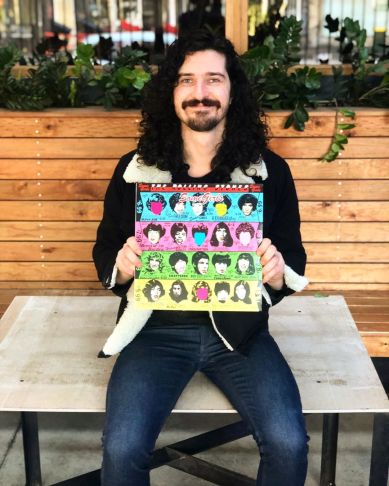
RECORD OF THE WEEK: THE ROLLING STONES – SOME GIRLS (1978)

64926810_380374732593773_793907592171589823_n

By the end of the 70’s the Stones, for the first time since they debuted, found themselves with something to prove. Disco and punk had exploded into the mainstream and the music press was increasingly branding the stars of the 60’s and early 70’s as dinosaurs. The band hadn’t released a cultural milestone since 1972’s Exile on Main Street and the departure of guitarist Mick Taylor had left a hole in their sound, the distinctive brand of musical alchemy that he had brought to the band unable to be replicated by the parade of guest players featured on their albums since. Mick Jagger’s fascination with the cult of celebrity and frequent appearances in the tabloids had begun to tarnish the band’s outlaw image and Keith Richards’ arrest for possession in Canada saw him facing seven years in prison, throwing the future of the band into question. Somehow, instead of being the Stones’ death knell, Some Girls gave them their first classic album since Exile, returned them to cultural relevance and managed to crystallise all that had beset them into a fresh sound that kept their blues rock roots at its core. Miss You, the album’s monster hit, fused the pulsing groove of disco with the grinding blues harmonica and slinky guitar that was so key to the band’s sound. Beast of Burden saw the band pen their first hit ballad since Angie and Far Away Eyes revealed that the Stones could really play country music when they wanted to, albeit in a tongue in cheek way. The full time addition of ex-Faces guitarist Ron Wood revitalises the arrangements, his counter-rhythms and stinging lead fusing with Keith Richards’ playing to fill the album with luscious, full guitar textures. Some Girls was a huge hit, asserted that the Stones still had plenty to say and began a new chapter in the sordid history of the world’s greatest rock n’ roll band.
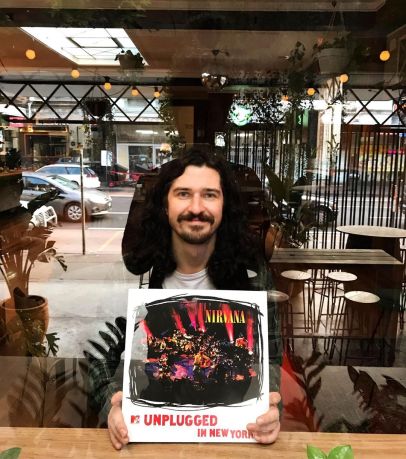
RECORD OF THE WEEK: NIRVANA – MTV UNPLUGGED IN NEW YORK (1994)

64495170_1928815707222902_2891160781916773074_n

Unplugged in New York was released shortly after Kurt Cobain’s death in 1994. Their label DCG and the surviving members of Nirvana had originally planned to release a live anthology called Verse Chorus Verse, however the mammoth task of sifting through years worth of live performances so soon after Kurt’s death proved too emotionally taxing a prospect. Instead, the group offered Unplugged in New York to a mourning public. The stripped back, intimate nature of the set and Cobain’s easy candour between songs serve to highlight the intense bursts of emotion scattered throughout, the most electrifying of which ends the version of Leadbelly’s Where Did You Sleep Last Night, the final song and unquestionable emotional climax of the record. MTV were reportedly unhappy with the set list because it was too light on Nirvana’s hits – instead the band played an eclectic set heavy on covers – David Bowie’s The Man Who Sold the Wold, a handful of Meat Puppets tunes and the aforementioned Where Did You Sleep Last Night. Retrospectively, the set list seems apt – a thoughtfully curated selection of songs that many speculate offered a glimpse into where Nirvana’s sound was heading. Sadly, we never got to find out. Rolling Stone wrote that Cobain could have “revolutionized folk music the same way he had rock.” Unplugged in New York is a fitting epitaph to Cobain’s legacy – full of light and darkness, offbeat humour and gut-wrenching sincerity. It is a remarkable album by a remarkable artist standing at the crossroads between life and death.

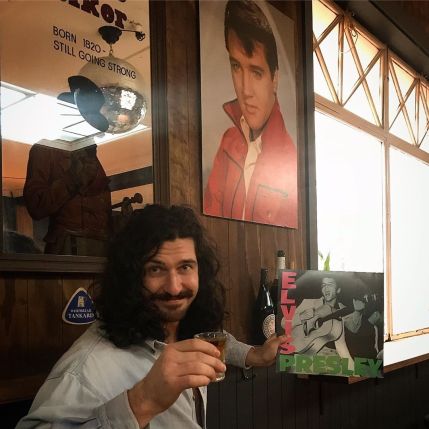
RECORD OF THE WEEK: ELVIS PRESLEY – ELVIS PRESLEY (1956)

64349648_689685911473984_5501911821075974643_n

In 1956, rock n’ roll was still very much an unknown quantity in the world of pop music. A young Elvis Presley had been setting the Country Western charts on fire with a red hot series of singles for the legendary Sun Records, but when Sun founder Sam Phillips sold Presley’s contract to RCA for the bargain sum of $35,000, nobody knew if he was going to make much of an impact in the world of pop. Luckily, he did – Elvis would go on to become perhaps the top selling artist of all time – and it all starts here with his self titled debut for RCA. Elvis’ television performances of lead single Heartbreak Hotel all but assured the success of the album – his electrifying, sexually charged style of performance was like nothing the world had seen before. Accusations of satanism, screaming hordes of teenagers and other general hysteria soon began to follow Elvis wherever he went. The album hit number one and sold a million units in 1956 alone – Elvis was a made man. Elvis’ debut features a lot of great covers – Tutti Frutti by Little Richard, I Got a Woman by Ray Charles and Blue Suede Shoes by Carl Perkins all became staples of the King’s live set and his interpretation of Blue Suede Shoes has become the definitive version for many. Other album highlights include Blue Moon, Shake Rattle and Roll and Trying to get to You. Guitarist Scotty Moore’s searing guitar work and Elvis’ explosive vocal stylings seamlessly coagulate all over this album, creating the template for rock n’ roll as we know it today and inspiring bands like the Beatles, Bob Dylan and Led Zeppelin to follow their dreams. Elvis’ first outing was as good as he ever got. All hail the King.

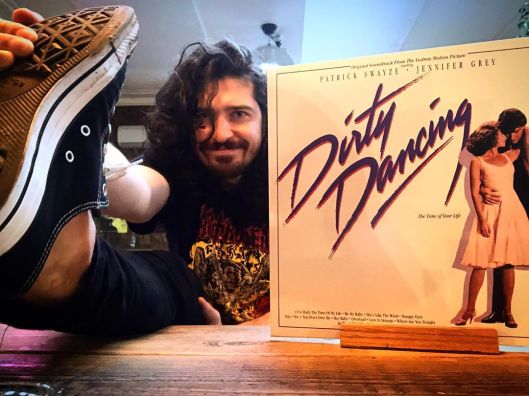
RECORD OF THE WEEK: VARIOUS ARTISTS – DIRTY DANCING OST (1987)

61073480_2352072685116563_5908088052031796591_n

(l’ve Had) the Time of My Life has probably been played at every high school dance since a sinewy Patrick Swayze shimmied into the public consciousness in 1987. Dirty Dancing was a pop culture phenomenon, cleverly challenging the oppressive comfort of a conservative late 80’s America with the sinuous rhythm and primal sex appeal of dance culture. Such a film lives and dies on the strength of its soundtrack and this one certainly delivers. Like the film, the Dirty Dancing soundtrack is a perfect slice of saccharine 80’s pop that evokes a nostalgic sensibility but it also shimmies, shakes and grinds at the same time. Even if it wasn’t connected to the film it would stand on its own as a great compilation. Highlights include Be My Baby by the Ronettes, Hungry Eyes by Eric Carmen and Patrick Swayze’s surprisingly good vocal turn, She’s Like the Wind. But you probably know that already – when a record sells 32 million copies (and spends 18 weeks at #1) its track listing has a tendency to tattoo itself into the popular imagination. The Dirty Dancing soundtrack is 32 years old but continues to walk the line between fun and schmaltzy, between goofy and sexy. The secret to its evergreen appeal (and what separates it from other soundtracks) is its unwillingness to be background music. After all, nobody puts Baby in the corner.