RECORD OF THE WEEK: SHANIA TWAIN – COME ON OVER (1997)

69473885_413215122732170_1357626078291603481_n

Come On Over continued to refine the country-pop formula that Shania and then-husband and monster-producer Mutt Lange (who you may remember from the previous Record of the Week, AC/DC’s Highway to Hell) had established on her sophomore album The Woman in Me. The arrangements and slick pop production continued to move away from traditional country in favour of boot-scooting countrified rock and soaring pop balladry punctuated with the monolithic choruses that made Lange famous. The enormous impact of this record on popular culture cannot be understated. Come On Over is the best-selling country music album of all time, the best-selling studio album by a female act, the best-selling album by a Canadian and the eighth all time best-selling album of all time to the tune of 40 million copies. Twain and Lange largely co-wrote this record and their romance is at the heart of much of the material. “You’re Still The One” and “From This Moment On” really benefit from Shania’s earnest delivery in much the same way that “Man! I Feel Like A Woman” and “That Don’t Impress Me Much” (allegedly penned by Twain after seeing a nude photo of Brad Pitt) are supported by her easy charisma. The scope of Come On Over’s material and Twain and Lange’s pitch perfect execution make this album’s colossal success richly deserved. An enduring classic after all these years – you’re still the one, Shania!
RECORD OF THE WEEK: THE DOORS – MORRISON HOTEL (1970)

66769842_617255715465362_1129554006109032967_n

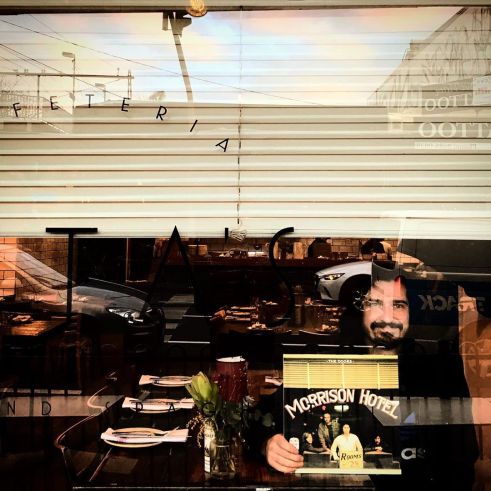
During a Doors concert in March 1969, Jim Morrison performed intoxicated and allegedly exposed himself to a crowd of 12,000 people at the Dinner Key Auditorium in Coconut Grove, Florida. In the relatively conservative environment of the late 60’s, the Doors’ publicity completely tanked. The Doors were forced to cancel their remaining tour dates and were blacklisted from radio. Their next album, the Soft Parade, was critically panned by many as contrived and pretentious and the lead single “Touch Me” did little to repair the Doors’ reputation with mainstream radio. Morrison’s alcoholism was mounting and several paternity suits had appeared. For a second there, it looked as if the Doors had hit the end of the line. Then they returned to the studio to record their penultimate LP, Morrison Hotel. Hailed as a return to form by critics, the Doors used this record to shed their previous skin. Gone were the psychedelic pretensions and ornate sting arrangements of the Soft Parade, replaced instead by a lean, bawdy bar band. Morrison had started moving away from his signature leather-clad shaman image, reasserting himself here as a fatalistic party boy in Morrison Hotel’s rowdier moments (Roadhouse Blues, Peace Frog, You Make Me Real) and a world weary blues crooner in the quieter ones (Blue Sunday, The Spy). The band’s move toward the blues would become much more pronounced on their next and last LP, the excellent L.A. Woman, but notable here is their use of a real life bass player, the accomplished blues guitarist Lonnie Mack who gives the Doors a looser, more swinging feel compared to the more rigid feeling Fender Rhodes piano bass played by Ray Manzarek on previous records. As a result of this, the Doors loose some of their disjointed Brechtian energy but perhaps that is a part of their persona that they were content to leave behind. Morrison Hotel is a leaner, hungrier Doors that have been around the block a couple times. Given Jim Morrison’s preoccupation with death and rebirth, it is fascinating to watch them reinvent themselves.

RECORD OF THE WEEK: THE STOOGES – RAW POWER (1973)

67142329_677352492731741_6522942350380314581_n

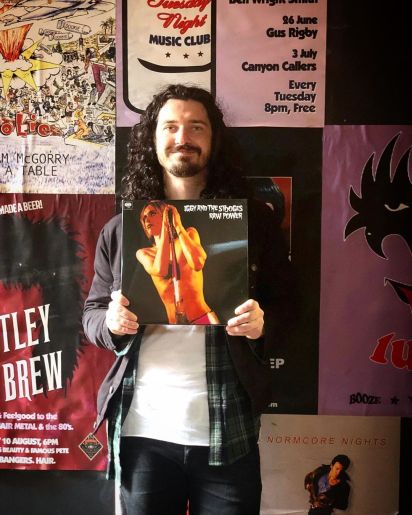
Prior to the release of Raw Power, the Stooges had hit the end of the road – after two genre defining classic albums, they had had broken up and burnt out by virtue of the primordial fire that had caused them to shine so brightly to begin with. Cue David Bowie: just like he had extended his bejazzled hand to Lou Reed after the demise of the Velvet Underground, Bowie signed Iggy Pop to his management company and secured him a record deal with Columbia. The album that they produced was Raw Power. Featuring new lead guitarist James Williamson, former lead guitarist Ron Asheton on bass and his brother Scott Asheton on drums, the Stooges were as hungry and depraved as ever. Raw Power was produced by Iggy and recorded in one day on primitive equipment in an outdated studio. Despite the energetic performances and inspired new material, Columbia refused to issue Iggy’s original mixes, insisting that Bowie remix the album first. Bowie’s mixes drew a lot of criticism from the Stooges’ hardcore fans for neutering the signature troglodyte groove of their drums and guitars but the album became a classic nonetheless, inspiring a wave of seventies punk and heavy metal despite modest sales. The Sex Pistols’ axe man Steve Jones has claimed that he learned guitar by taking copious amounts of speed and playing along to Raw Power. In 1997 Iggy Pop was invited to remix the album for its re-release, restoring much of the wildness and grit of his original vision. This release includes both mixes – a side by side examination reveals Iggy’s mix as a more satisfying (and much louder!) albeit less dynamic listening experience. This audiophila is all by-the-by though – this record was never meant to be perfect. Raw Power gave Iggy and the Stooges a new lease on life and forever changed the landscape of rock n roll, often being labeled as a pivotal proto punk record. Pop’s declaration that he is a “street walking cheetah with a heart full of napalm” is a call to arms that has echoed in bars and bedrooms, frightening parents and teachers since 1973 and that’s what the Stooges are all about. Play this one loud!

RECORD OF THE WEEK: VAN MORRISON – ASTRAL WEEKS (1968)

67177960_2114825968821682_2759250728570981323_n

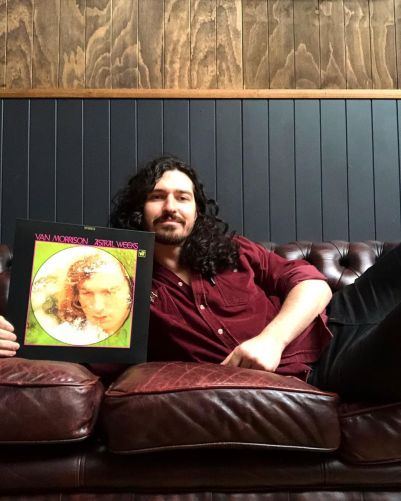
Astral Weeks is a singular album in Van Morrison’s discography and indeed in the pantheon of classic rock albums in which it is often included. Owing little to the blues and soul that have often defined Morrison’s sound, here he instead uses a palate of Celtic folk and jazz to weave a hypnotic soundscape of the earthly and the divine driven by the excavation of memories of his native Belfast. This was Morrison’s first record for Warner who had purchased his contract from his previous label Bang. Stipulated in the fine-print of this deal was a clause dictating that Bang would receive fifty percent of the publishing royalties for any Van Morrison singles released in 1968. This, perhaps, is why there are no singles from Astral Weeks. Instead, it is often referred to as a song cycle and indeed, the rich textures of each song are only enhanced by their inclusion in the tapestry of this album. Morrison’s vocals here are so expressive, sometimes pained and sometimes jubilant; sometimes rooted in nostalgia and often wordlessly channeling the strange mysticism that inhabits Astral Weeks. Van’s wayward guitar strumming and the violins and flutes that drift in and out all pivot around the mesmerising bass playing of Richard Davis to create an atmosphere that feels a thousand years old. Key moments include the title track and Madame George but this record is strongest as a whole. As Van sings in Astral Weeks’ opening lyric, let him venture in the slip stream, through the viaducts of your dream.