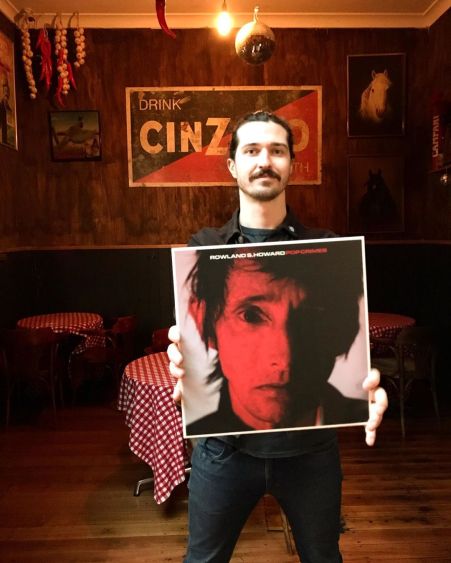
RECORD OF THE WEEK: ROWLAND S. HOWARD – POP CRIMES (2009)

69009641_220915965539919_6320554686530337261_n

Released shortly before his death in 2009, Rowland S Howard’s dark/sexy/edgy masterpiece Pop Crimes is the final instalment in his sporadic recording career and testament to his visionary and craftsman-like approach to songwriting. Woven into the gritty tapestry of Pop Crimes are elements of Dick Dale’s guitar driven surf rock, Spector-esque 60’s pop, the fatalistic sneers of Lou Reed and Leonard Cohen and the dissonant virtuosity of Howard’s old band the Birthday Party. Undertaking the recording of Pop Crimes while struggling with serious health issues, Howard surely suspected that this record may be his last and lyrically it can be interpreted as something of an epitaph, although even in failing health Rowland remains razor sharp. He sings of Catholic girls with uzis and narcotic lolipops with a weary conviction as the album takes shape around hypnotic, dirge-like arrangements and stinging, chaotic lead guitar breaks. Highlights include album opener (I Know) A Girl Called Johnny, the slinking title track, Wayward Man in all of its Lee Hazlewood inspired glory and the epic album closer the Golden Age of Bloodshed. Howard’s work has always had a sense of the cinematic and Pop Crimes is no different – an immersive record crafted around rich texture and great writing, a feather in the cap of Rowland’s always provocative oeuvre.
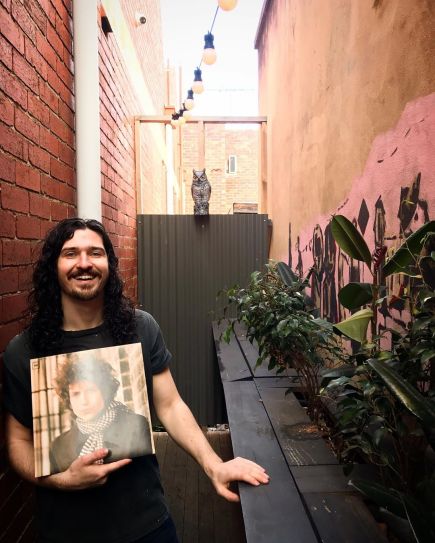
RECORD OF THE WEEK: BOB DYLAN – BLONDE ON BLONDE (1966)

67890962_2321601051484855_419439423368252975_n

After shocking the world in the mid 60’s by going electric and augmenting his intimate folk style with the stylistic trimmings of the still-feared rock n’ roll genre, Dylan released three classic records in rapid fire succession. Following Bringing It All Back Home and Highway 61 Revisited, 1966 saw the release of Blonde on Blonde – one of rock’s first double albums and the conclusion of the androgynous, amphetamine fuelled persona that Dylan cultivated during his electric period. After a few false starts in New York with his backing band The Hawks (who later became The Band), Dylan moved the Blonde on Blonde sessions to Nashville where, with the help of guitarist Robbie Robertson, organist Al Kooper and an all-star cast of Nashville session players, he wrote and recorded the bulk of Blonde on Blonde in just four days. The sessions often ran late as Dylan, feverishly writing lyrics while the band napped and played cards, would summon them at three in the morning to flesh out his visions. However unorthodox Bob’s schedule was, the results evident on Blonde on Blonde are inarguably brilliant. Dylan’s writing draws on the long, winding songs that he established in his folk years, heavily infusing them with abstract symbolism, the absurd and the flat out surreal without compromising the directness and conversational delivery that has always allowed him to connect with his listeners. Musically the bedrock of most of the songs is Chicago blues based, dominated by the triple lead attack of guitar, organ and harmonica that Dylan often favours, however the influences of country, folk and rock n roll seamlessly blend to give this record a heavily textured and often imitated sound with its lashings of brass and barroom piano. Dylan once said that “It’s that thin, that wild mercury sound. It’s metallic and bright gold with whatever that conjures up.” From the woozy squall of album opener Rainy Day Women #12 & 35 to the surreal 11 minute closer Sad Eyed Lady of the Lowlands, Blonde on Blonde is captivating in its entirety – a rare document of a genius at the peak of his powers.

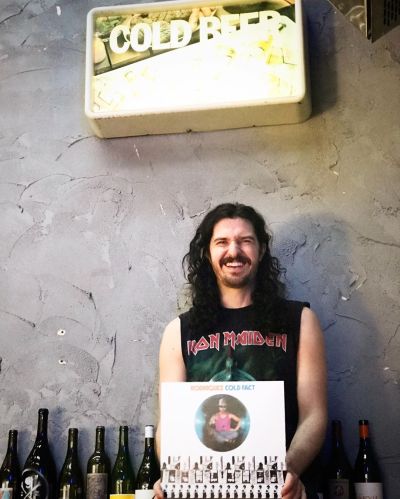
RECORD OF THE WEEK: RODRIGUEZ – COLD FACT (1970)

69431258_181938052833513_3648406744169540098_n

Cold Fact was released in 1970 to little acclaim – ignored by radio and failing to chart, the record was considered a flop. The record was a far cry from the explosive proto-punk of Rodriguez’ contemporaries in the Detroit scene such as the MC5 and the Stooges and likewise was worlds apart from the urbane glam rock of David Bowie and T-Rex that had begun to dominate the pop market. Replete with its Dylanesque lyrics and psychedelic orchestral arrangements, Cold Fact quickly slipped into obscurity with The songwriter releasing one more record to a similarly muted reception before calling it a day and returning to his day gig as a labourer in order to support his growing family. Unbeknownst to Rodriguez however, bootlegs of Cold Fact had begun to circulate in South Africa and Australia, reaching cult status and becoming heralded as a rock classic, often mentioned in the same breath as Dylan, the Beatles and the Rolling Stones. The lack of information about Rodriguez only added to his mystique and his legend grew by word of mouth for decades, the most popular of which was that Rodriguez had blown his brains out and that was why he’d only released two records. As documented in the Academy Award-winning documentary Searching for Sugar Man, a bewildered Rodriguez, very much alive, learned of his fame decades later and returned to the stage to much fanfare and critical acclaim, continuing a successful touring career to this day. The spark that started Rodriguez’ legend, Cold Fact, deserves every ounce of the acclaim it has received. The opening track Sugar Man is anthemic, a lilting ode to a drug dealer gently crooned through a fog of reverb. Establishment blues laments social inequality with machine-gun street poetry and I Wonder captures the excitement and awkwardness of adolescent love with its bouncing melody. Cold Fact is one of the truly great lost records and Rodriguez unique journey out of obscurity only makes it more compelling. A classic.