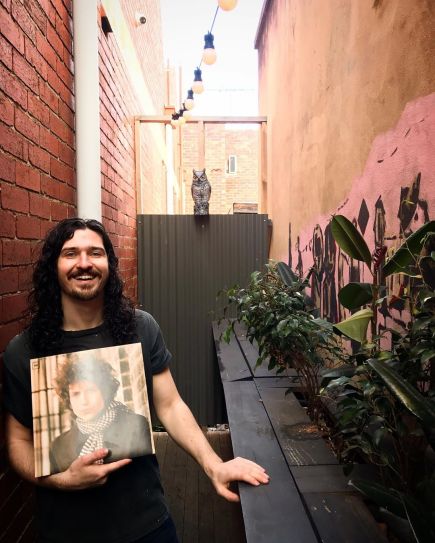
After shocking the world in the mid 60’s by going electric and augmenting his intimate folk style with the stylistic trimmings of the still-feared rock n’ roll genre, Dylan released three classic records in rapid fire succession. Following Bringing It All Back Home and Highway 61 Revisited, 1966 saw the release of Blonde on Blonde – one of rock’s first double albums and the conclusion of the androgynous, amphetamine fuelled persona that Dylan cultivated during his electric period. After a few false starts in New York with his backing band The Hawks (who later became The Band), Dylan moved the Blonde on Blonde sessions to Nashville where, with the help of guitarist Robbie Robertson, organist Al Kooper and an all-star cast of Nashville session players, he wrote and recorded the bulk of Blonde on Blonde in just four days. The sessions often ran late as Dylan, feverishly writing lyrics while the band napped and played cards, would summon them at three in the morning to flesh out his visions. However unorthodox Bob’s schedule was, the results evident on Blonde on Blonde are inarguably brilliant. Dylan’s writing draws on the long, winding songs that he established in his folk years, heavily infusing them with abstract symbolism, the absurd and the flat out surreal without compromising the directness and conversational delivery that has always allowed him to connect with his listeners. Musically the bedrock of most of the songs is Chicago blues based, dominated by the triple lead attack of guitar, organ and harmonica that Dylan often favours, however the influences of country, folk and rock n roll seamlessly blend to give this record a heavily textured and often imitated sound with its lashings of brass and barroom piano. Dylan once said that “It’s that thin, that wild mercury sound. It’s metallic and bright gold with whatever that conjures up.” From the woozy squall of album opener Rainy Day Women #12 & 35 to the surreal 11 minute closer Sad Eyed Lady of the Lowlands, Blonde on Blonde is captivating in its entirety – a rare document of a genius at the peak of his powers.
 Pete Whelan