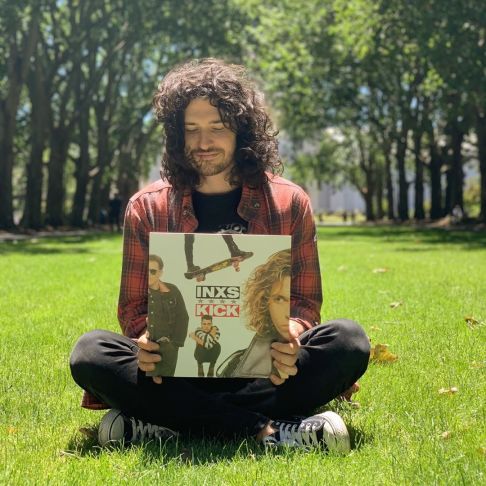
RECORD OF THE WEEK: INXS – KICK (1987)

72678298_2568480006533406_3242584487237533147_n

INXS’ finally grabbed the brass ring of fully-fledged international pop stardom on their 6th LP “Kick.” After “What You Need”, the hit single from their previous record ”Listen Like Thieves” had stormed the international charts, the floodgates were wide open for Hutchence and co to make their mark on pop culture at large. Seemingly tailor-made for the MTV era with their innovative video clips, drop-dead-gorgeous frontman and shimmering brand of rock as much as home in the club as the pub, INXS were met by a surprising amount of resistance from Atlantic Records president Doug Morris who offered the band a million dollars to go and make a completely different record rather than release Kick. Thankfully, the band persisted and the label was dead wrong – Kick was a monster hit. “Need You Tonight”, “Devil Inside” and “New Sensation” hit 1, 2, and 3 respectively on the Billboard Charts and “Never Tear Us Apart” hit number 7. The the songwriting partner between Michael Hutchence and Andrew Farriss is in full effect here, yielding every one of the album’s 11 original songs. Kick overflows with swagger and has the chops to back it up. The crown jewel in INXS’ discography.
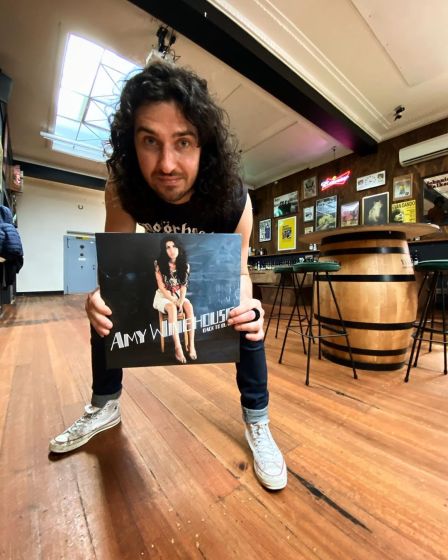
RECORD OF THE WEEK: AMY WINEHOUSE – BACK TO BLACK (2006)

75498658_173873903763663_8847627459463999071_n

In her sophomore record Amy Winehouse mines her own tumultuous private life for subject matter, penning eleven songs dominated by unflinching themes of addiction, grief and infidelity. On paper, this kind of thematic makeup would make for a rather melancholy album but somehow Back to Black is jubilant in spite of it. Winehouse’s infectious energy, half Michael Caine and half Billie Holliday, is in abundant supply, driving the keen wit and easy charm of her songwriting and the velvet sledgehammer of her distinctive croon. Production credits are split evenly between Saalam Remi and Mark Ronson who painstakingly collage the history of soul music from the Ronettes to Mary J Blige without sounding completely derivative, managing to create a record that sounds fresh rather than an exercise in soul-revivalism. Sharon Jones’ band, the legendary Dap-Kings are on loan here and are, as always, on point. Listening to Back to Black in hindsight after Amy’s death in 2011, it’s hard not to see a lot of foreshadowing in the songs on this record. It is a testament to her skill that she was able to deal with such darkness in a way that brought light to so many.


RECORD OF THE WEEK: THE BEATLES – RUBBER SOUL (1965)

74337079_2190008304627679_1154927473348135159_n

Having just returned from a North American tour, met Elvis Presley and the Byrds and smoked their first doobie with Bob Dylan, the Beatles had absorbed the folk-rock and psychedelia running wild in America in 1965 and and emulsified it with the chart-topping rock n’ roll that had brought them to the dance – the result was Rubber Soul, the beginning of the Beatles’ adolescence and shift away from albums driven by hit singles. That’s not to say there aren’t any toe-tapping hits here: Drive My Car, You Won’t See Me and Ringo’s token vocal turn What Goes on all brim with the Fab Four’s characteristic pep and enthusiasm. However for every “classic” Beatles tune there is an atypical counterpart – “Girl” is languid and sinister, John Lennon’s vocal punctuated by what sounds like long drags on a joint (Lennon described Rubber Soul as “the pot album”) while Norweigan Wood, famous for its use of the sitar, is a hypnotic folk song dealing in dense, abstract imagery. While Rubber Soul didn’t revolutionise the musical landscape in a way that Sgt Pepper or the White Album did, it certainly reflects the growing sophistication of the lads’ craft and is notably the first time since their gestation that pop culture started to influence the Beatles, rather than the other way around.