RECORD OF THE WEEK: NEIL YOUNG – DEAD MAN (1996)

106554144_194305211987605_5942147121976818983_n

Neil Young’s improvised, unaccompanied soundtrack, channeled largely through his mythical Gibson Les Paul, “Old Black”, seems spiritually connected with the stark monochromatic landscape and visceral beauty of Dead Man, Jim Jarmusch’s cult psychedelic western. While writing Dead Man – a reimagining of the American Wild West interspersed with the metaphysical poetry of William Blake – Jarmusch reportedly spliced together cassettes of some of Neil Young’s instrumental passages to inspire him as he wrote, calling Young’s playing “masterfully, beautifully damaged rock-and-roll music—perfect imperfection.” With Young’s DNA already in the bedrock of Deadman, the film and his his style aligned perfectly, and the soundtrack finds his playing at its most pure. Unbeholden to traditional song structure and free from the constraints and expectations that would accompany a traditional studio album, Young watched the film with guitar in hand and played reactively to what he saw, using the guitar as a direct tool of expression. A concept so avant-garde yet so simple is classic Neil Young – the result is an ambient classic and some of his finest work.
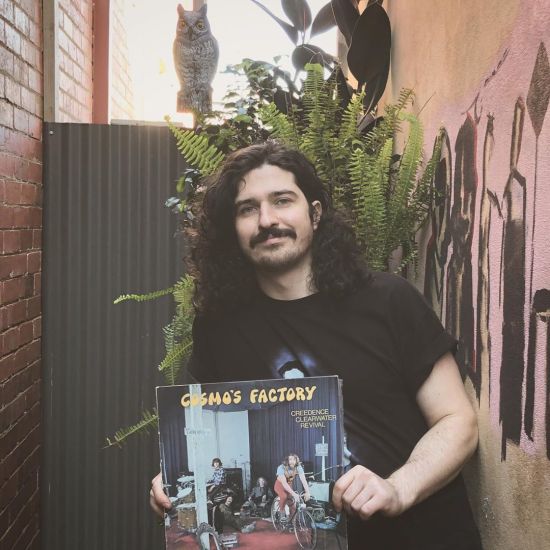
RECORD OF THE WEEK: CREEDENCE CLEARWATER REVIVAL – COSMO’S FACTORY (1970)

100516640_2362313347402142_1403814220194909338_n

Creedence Clearwater Revival are synonymous with summertime BBQ’s, Vietnam War movie soundtracks and last call at your local dive bar. They are so ubiquitous that perhaps to some degree they are taken for granted in the classic rock canon. Their sound is a marriage of the slap-back soaked honky tonk of Nashville’s Sun Records and the bluesy, guitar driven grind of Chicago’s Chess records. Their songs are stylised to sound as if they are drifting from the depths of a Louisiana swamp yet their sun-kissed California image and hook laden songs land a little closer to the Beach Boys. A truly American band, Creedence is a collage of all of these things and Cosmo’s factory stands as their crowning glory. It is also the beginning of the band’s implosion – chief writer and lead vocalist John Fogerty kept a tight leash on the band, insisting on being the band’s only singer/songwriter and business manager. Drummer Doug “Cosmo” Clifford dubbed his house the “Factory” as Fogerty made them rehearse there almost every day. Tensions simmered for years and rhythm guitarist Tom Fogerty, John’s brother, quit after the completion of this album. Most of the songs on this record ended up as hits in one way or another, each flawlessly executed by a band at the peak of their powers, somehow so perfectly polished in all their swagger and raggedness, leaving Cosmo’s Factory as a high water mark in Creedence’s impressive career.

RECORD OF THE WEEK: IRON MAIDEN – POWERSLAVE (1984)

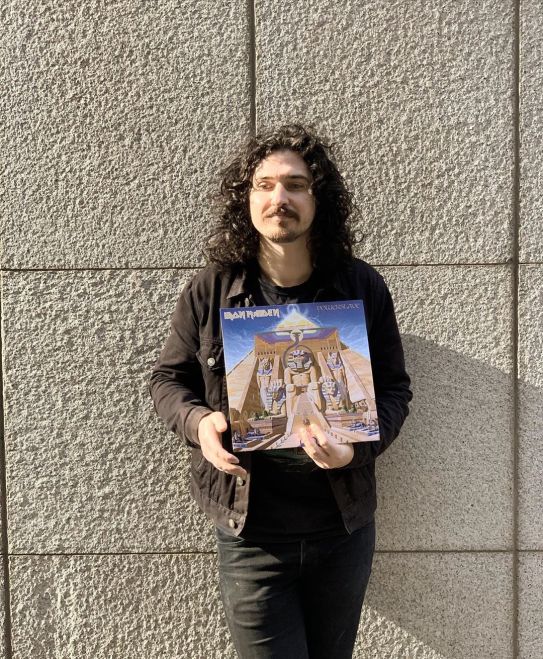
97931040_664113220804711_7953667168362953229_nIron Maiden’s galloping, literary brand of heavy metal had been on a roll since the inclusion of pilot, olympic-level fencer, mystery novel writer and former Samson vocalist Bruce “the human air raid siren” Dickinson as their frontman. Moving away from the punk influenced sound they’d established with previous frontman Paul Di’Anno, Maiden moved from strength to strength with Dickinson at the helm, riding the wave of popularity that came with the New Wave Of British Heavy Metal spearheaded by Judas Priest and Motörhead. The third album featuring Dickinson, Powerslave positioned Iron Maiden at the very crest of heavy metal and the subsequent tour allowed Maiden, already wildly popular in the UK and Europe, to headline huge venues during their gruelling tour of the United States, adding world domination to their already impressive resume. The album begins with the one-two punch of album openers Aces High and 2 Minutes to Midnight (written about an RAF dogfight during the Battle of Britain and the doomsday clock respectively), and ends with 13-minute album closer Rime of the Ancient Mariner – an epic based on the Coleridge poem of the same name and favourite of college radio DJ’s who, due to its length, had ample time to smoke a joint whenever it was played. Chief songwriter and bassist Steve Harris’ ability to craft compelling, anthemic material from historical sources made Iron Maiden quite distinctive in the often tropey world of heavy metal and the band’s technical mastery of the form reached new heights on Powerslave, unquestionably cut during the band’s prime and ensuring their legacy for years to come.
RECORD OF THE WEEK: YOU AM I – HI FI WAY (1995)

94659349_699631334132416_3081274733461203394_n

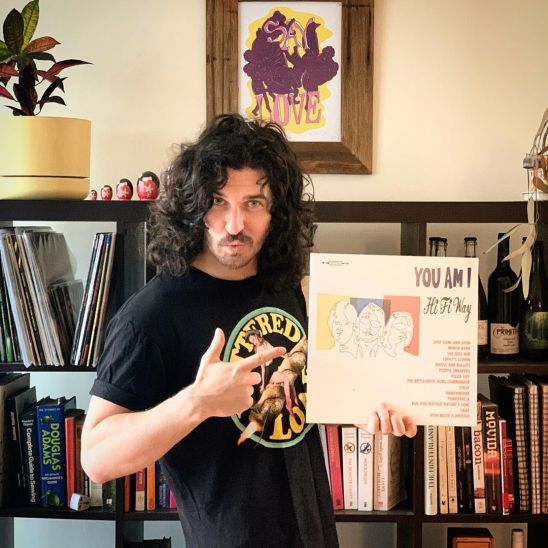
You Am I hit the the top of the Aussie charts with their sophomoric record Hi Fi Way, seeing the band embellish the punk and grunge driven formula established on their debut with elements of the frantic rhythm guitar of the Kinks and dynamic arrangements of the Who. With help from Sonic Youth axe-man Lee Ranaldo on production, the band opts for a stripped down, four-to-the-floor approach with much of the material, save for the occasional string overdub during tender moments from vocalist Tim Rogers. The whole album seems built around Rogers’ lyricism and rightfully so – his writing is incredibly relatable for such introspective subject matter, whether he’s singing about “personality pills and something red to swill” or washing his hands four thousand times a day, Rogers’ ability to make a listener nostalgic or heartbroken over something that they’ve never experienced is both a rare gift and the mark of a true craftsman. It isn’t easy to look in the mirror and write what you see – his unflinching honesty as a writer is the lynchpin of these songs.

RECORD OF THE WEEK: ROXY MUSIC – ROXY MUSIC (1972)

94151690_228791635040808_3943894719535358707_n

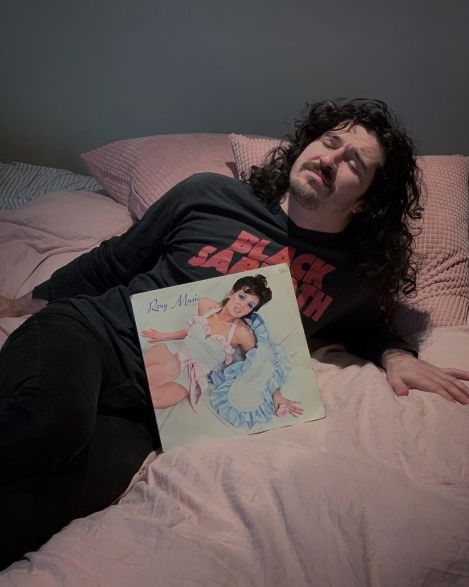
Roxy Music’s first record, shimmering with campy decadence and art-school ambition, is the sum of the chemistry between two of its principal creators – Bryan Ferry and Brian Eno. Ferry, Roxy Music’s chief songwriter and lead vocalist was a Humphrey Bogart obsessive who’s love of fine tailoring and supermodels had seen him dubbed “Byron Ferrari” by the rock press. Eno was to be an electronic music pioneer whose avant garde production style and synthetic electronic “treatments” for songs (which would notably become a centrepiece of David Bowie’s Heroes a few years later) would revolutionise pop music in the years to come. On Roxy Music, both men’s debut album, the wilful dissonance between Ferry’s pouting romanticism and Eno’s proto-ambient techniques really set the band apart from the rest of the early seventies glam rock pack. While the two are still discovering their chemistry, the moments where they connect are alchemical – the stutter of album opener Re-make/Re-model and the liquid velvet of Ladytron are “eureka” moments for the band. Unchecked, their ambitions carry them in different directions -the 7 minute, Eno driven synth jam “Sea Breezes” is an example. Eno would only stay with the band for one more record (the excellent For Your Pleasure) but this, Roxy Music’s debut, was the birth of a new kind of rock n’ roll: highly stylised and decadent but also world-weary and intelligent with tongue firmly planted in cheek.

RECORD OF THE WEEK: KING GIZZARD AND THE LIZARD WIZARD – QUARTERS! (2015)

92539155_125854555700661_8956138613609673845_n

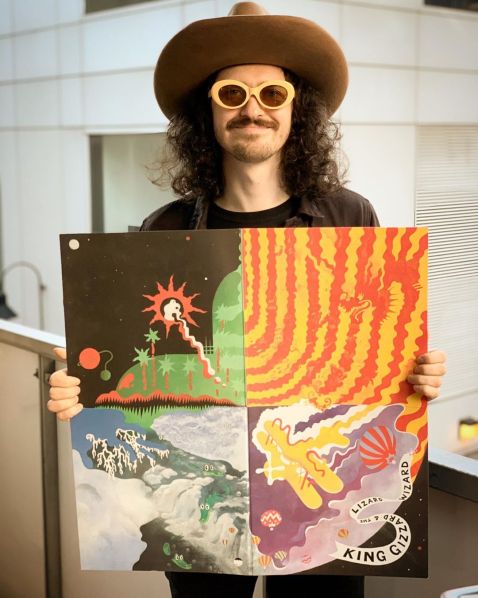
King Gizzard’s sixth album, Quarters!, is a sprawling suite of four songs that sees the shapeshifting septet turn their focus to jazz-inflected acid rock. Each of the four tracks on Quarters! clocks in at exactly 10:10 – while the significance of this is unclear, the influences of LA Woman era Doors and Houses of the Holy era Zeppelin certainly inform these sprawling, proggy excursions. Album opener the River drifts along in an upbeat haze and the other three tracks follow suit – all easy, spacious jams over pulsating jazz rhythms that ebb and flow quite naturally. Each song finds an agreeable groove to inhabit and sticks to it, filling the space with intricately woven guitar textures and rhythmic interplay before drifting into the next jam as fluidly as a change of seasons. A hard left turn for the band which saw them nominated for Best Jazz Album at the 2015 Aria Music Awards, Quarters! is listless and meandering in the best way, 40:40 of pure psychedelic day-dream.

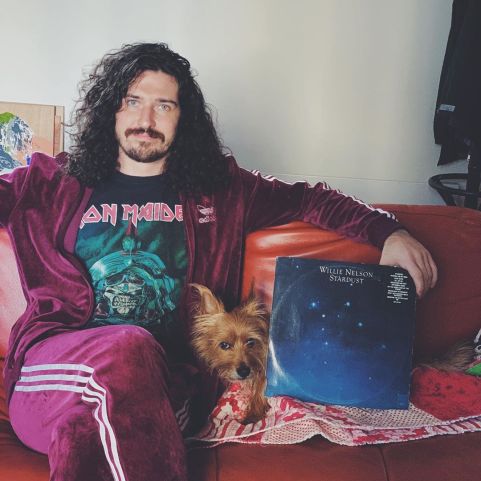
RECORD OF THE WEEK: STARDUST – WILLIE NELSON (1978)

91189279_766389660556430_1808455950237912581_n

Willie Nelson’s rough and ready reputation as a country music outlaw was thrown into stark relief when the Red Headed Stranger reinvented himself as balladeer on 1978’s Stardust. A songwriter as gifted as Nelson doing a record of covers was considered unusual and perhaps Stardust was not intended to be the tour de force that it became but nevertheless this collection of standards produced by Stax Records legend Booker T Jones transformed Willie from country music icon to international pop-star overnight. Perfectly augmented by his band’s restrained presence, Nelson’s emotional reimaginings of classics like Georgia on my Mind and Unchained Melody helped to distinguish him as one of the finest musical interpreters of his generation. These days a standards album evokes the lounge-lizard croon of artists in their twilight years trying to reinvent themselves, but Nelson’s career was white hot when he made Stardust. It was a bold move, and a smart one too, allowing his smoky drawl to make an indelible mark on the American songbook.

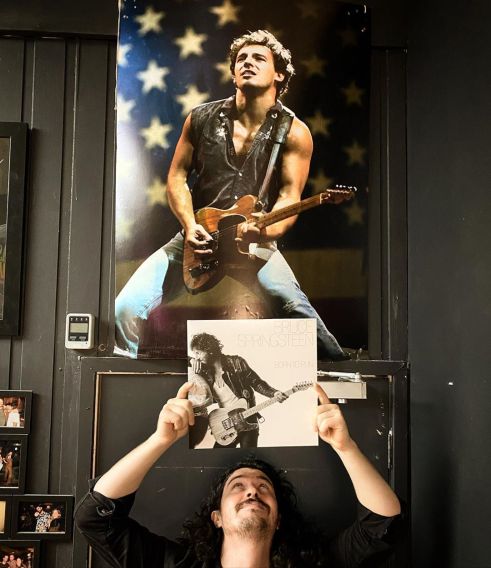
RECORD OF THE WEEK: BRUCE SPRINGSTEEN – BORN TO RUN (1974)

90091354_513544699593348_7317452006326753024_n

Born to Run is the record that made Springsteen into a bonafide star – like Kerouac and James Dean rolled into one, the Boss injects a cinematic sense of the romantic into this portrait of the working class Jersey Shore of 1974. Alive, in love and punch drunk on the possibilities of youth, freedom and rock n’ roll, the universal language of Born to Run makes you feel nostalgic for a world you have never known. Springsteen’s poetry and unflinching sincerity are so inscrutable that Born to Run doesn’t feel like a trope heavy concept album for a second – it possesses a strange quality that absolves you of cynicism the moment the needle drops, immersing you in tales of young love, tough guys, motorcycles and the American dream for thirty-nine minutes and twenty-three seconds. Scoring the festivities, of course, are the almighty E Street Band. Able to turn time to slow motion with the tap of a glockenspiel or make the hairs on your neck stand up with the rumble of Clarence Clemons’ iconic saxophone, the E Street Band flesh out Springsteen’s world and almost make it materialise before you. Born to Run is up there with Springsteen’s – or anybody’s – finest work. It doesn’t get much better than this! Just put it on your turntable, “roll down the window and let the wind blow back your hair. The night’s busted open. These two lanes will take us anywhere.”

RECORD OF THE WEEK: NEIL YOUNG – AFTER THE GOLD RUSH (1970)

88241656_844568839339447_6950205918607571008_n

After the Gold Rush sees Young develop further as a visionary songwriter after the rich successes of his previous LP Everybody Knows this is Nowhere. Although the simmering guitar jams of the previous LP return (Southern Man, When You Dance I Can Really Love), the heart of this record is in Young’s lyricism. Songs like the surreal title track and Don’t Let it Bring You Down highlight Young’s ability to blend darkness and light into the same lyric and see him shifting gears toward the more folk oriented Harvest. Only Love Can Break Your Heart is demonstrates Young’s gift for heart-string-pulling balladry and Southern Man with it’s condemnation of bigotry in America’s south earned itself a huge clap back in the form of Lynyrd Skynyrd’s Sweet Home Alabama. After the Gold Rush can be seen as a transition between the rockin’ Crazy Horse assisted Everybody Knows This is Nowhere and Harvest but I find it to be a perfect blend of the two, capturing Neil at his most creative and vital.

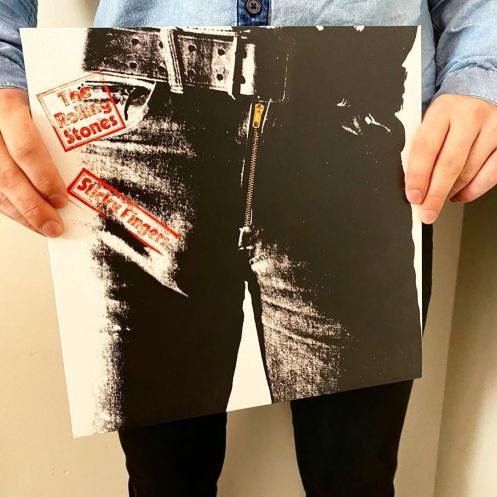
RECORD OF THE WEEK: THE ROLLING STONES – STICKY FINGERS (1971)

88200675_781385795603321_5376042718756844984_n

Of the Stones’ flawless series of records beginning with 1968’s Beggars Banquet and ending with the ragged excesses of 1972’s Exile on Main Street, there is a case to be made for Sticky Fingers as the Stones’ absolute peak. Cloaked in a druggy haze, Sticky Fingers saunters through a smorgasbord of the Stones’ hottest cuts, from the hot-footed Brown Sugar through soaring country opus Wild Horses, the Santana-inspired long form jam on Can’t You Hear Me Knocking, good natured country vamp Dead Flowers and the haunting album closer Moonlight Mile. Jimmy Miller’s production is both canny and spare and new guitarist Mick Taylor’s interplay with Keith Richards’ swashbuckling rhythm guitar allows the Stones’ songs to be ornate and dynamic in ways they never have before. Jagger, as always, plays the pouting ringmaster with his vocal approach shapeshifting from song to song, giving each a distinct feel. Sticky Fingers is a snapshot of the Stones at their most vital – a wildly creative pop culture phenomenon more than deserving of the mantel of the greatest rock and roll band in the world.