RECORD OF THE WEEK: LED ZEPPELIN – LED ZEPPELIN (1969)

84635145_168045391318546_5813489412341193573_n

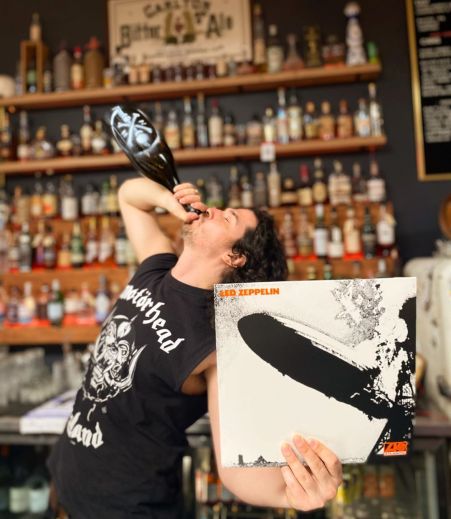
The history of rock music can quite comfortably be divided into two categories – before Zeppelin I and after Zeppelin I! Although the undulating, sinuous heavy metal of this record is not without precedent, Hendrix and Cream in particular, Led Zep spawned a hard rock subculture that was quite seperate from the pop music of the time. It was subversive, sexual and anti establishment – listen to Robert Plant’s doom struck howl on Dazed and Confused or Jimmy Page’s savage riffing on Communication Breakdown – this record spoke to people on a primal level. That’s not to say that it’s without craftsmanship or nuance – the musicianship of each member speaks for itself. This record, and many of their later efforts, were critically panned by Rolling Stone, dismissing the songs as “weak and unimaginative” (look up the review, it is scathing!). Fifty years later and a million Rolling Stone covers later, I’m sure that writer never imagined the impact Zeppelin would have. This record was the beginning of a cultural phenomenon that is as potent today as it ever was.
RECORD OF THE WEEK: IGGY POP – LUST FOR LIFE (1977)

IggyReview

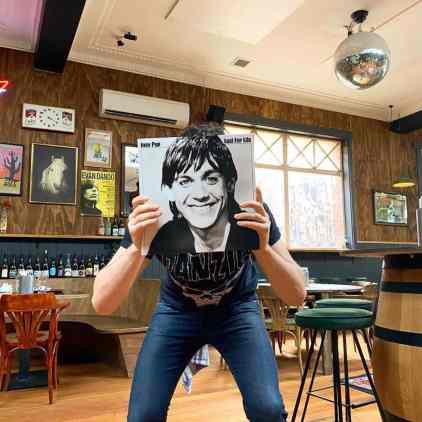
Iggy’s second Bowie-produced LP was cut in Berlin in 1977, the year that the punk wave that Iggy began with the Stooges years earlier had finally exploded. By the time Lust for Life came around, Iggy had grown beyond the scrappy Detroit punk that defined his early career and his sound had acquired an intellectual element that defied the violent primordialism of the Stooges. While Pop still rocks hard here on tracks like the eponymous Lust For Life (which became a hit many years later after its prominent use on the Trainspotting soundtrack), Sixteen and Some Weird Sin, there is an element of weary urban ennui in tracks like the Passenger and Turn Blue. This, combined with Bowie’s krautrock-inspired production and the pair’s obvious chemistry as songwriters, creates an album that plays to Iggy’s strengths – his showmanship and energy, but augments them with occasional vulnerability and pushes him into new sonic territory. Along with his previous album The Idiot, Lust For Life is Iggy’s finest solo offering and defined his sound and persona for the rest of his career.

RECORD OF THE WEEK: KINGS OF LEON – YOUTH AND YOUNG MANHOOD (2003)

82884180_845686149221581_1157202686971484448_n

Before their sex was on fire, Kings of Leon were a rag-tag bunch of southern brothers (and cousin) with a barnstorming southern rock flavoured debut record, Youth and Young Manhood. Slotting neatly into the guitar rock revival of the early 00’s alongside the White Stripes, the Hives and the Vines, the band found themselves affectionately dubbed “the Southern Strokes” by the rock press. While Youth and Young Manhood certainly doesn’t break any sonic ground, the band seem quite content not to reinvent the wheel, instead preferring to conjure a hip-shaking barn dance with the spectres of Tom Petty, the Allman Brothers and Creedence Clearwater Revival all looming largely. The Kings’ roughly hewn southern-rock charm would fade little by little on each subsequent album in favour of slick U2-sized balladry, but here on their debut they deliver a record that does exactly what it says on the box – a well crafted set of rock n’ roll tunes about self discovery and youthful indiscretion that, while proudly wearing its influences on its sleeve, is emotional, direct and electrifying.
Key tracks: Red Morning Light, Happy Alone

RECORD OF THE WEEK: PAUL KELLY – SONGS FROM THE SOUTH (2019)

74521304_515007679361100_6770537082127882718_n

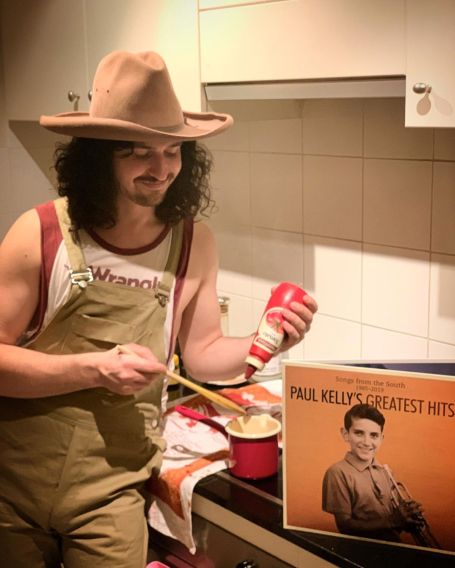
Do you know what really gets my goat? Every bloody Christmas in Australia we’re inundated with “white Christmas” imagery from England and America while, in our own backyard, it’s hotter than a shearer’s armpit. As I write this, it’s 42 degrees outside and half the shops are covered in frosted snow flakes and reindeer. Wake up, Australia! So in the interest of further developing our national identity, for this week’s record I’ve selected Paul Kelly’s excellent new greatest hits anthology as a representation of his tear-jerker of an Aussie Christmas Carol, How to Make Gravy. Written from the perspective of an incarcerated man writing a letter home before Christmas, How to Make Gravy reads like a laundry list of Australian Christmas; Eating a roast in hundred degree heat? Check. Tomato sauce in the gravy for extra tang? Check. Your drunken uncle hitting on your girlfriend while you’re losing your mind in jail? Classic. And of course being a Paul Kelly song, his keen eye for detail, folksy charm and gift for communicating subtlety and emotional nuance all help to make this song a crown jewel in his ouvre.

RECORD OF THE WEEK: JEFF BUCKLEY – GRACE (1994)

73480714_1237991699745042_9154148361083208144_n

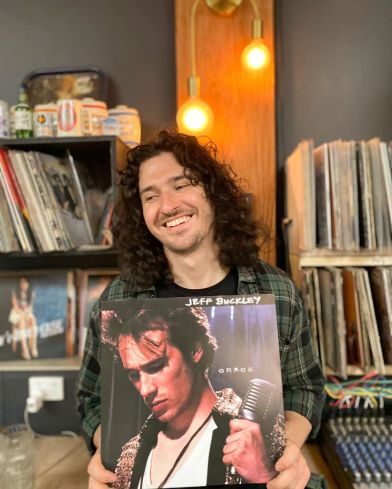
As I researched this review, I began to realise that everybody who I had spoken to had a very distinct visual memory of where they were the first time that they heard Grace – a memory they treated with the kind of reverence reserved for other coming-of-age milestones like their first kiss or the first time they got drunk. Grace radiates a strange spirituality, a special kind of magic that is difficult to explain. Central to its mystique is Jeff Buckley himself, the prodigious songbird who recorded just one record and died young a few years later, drowning in the Mississippi River. Jeff’s most potent gift, a feverish wail that could shift from breathy falsetto to siren-like howl with the ease of a bird taking flight, is the centrepiece of Grace. It’s a rare talent that can connect as deeply with a listener as Buckley does and as his tone shifts from choirboy to chanteuse to wailing rock god, a deep sense of intimacy prevails. At times, Buckley’s anguished cries give you the sense that he is suffering greatly, giving Grace an almost Passion-of-the-Christ-like quality that, coupled with his early death, contributes to the sacred, ethereal quality that permeates Grace.

RECORD OF THE WEEK: INXS – KICK (1987)

72678298_2568480006533406_3242584487237533147_n

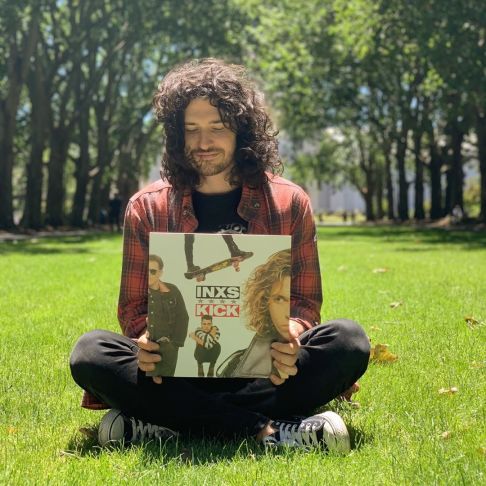
INXS’ finally grabbed the brass ring of fully-fledged international pop stardom on their 6th LP “Kick.” After “What You Need”, the hit single from their previous record ”Listen Like Thieves” had stormed the international charts, the floodgates were wide open for Hutchence and co to make their mark on pop culture at large. Seemingly tailor-made for the MTV era with their innovative video clips, drop-dead-gorgeous frontman and shimmering brand of rock as much as home in the club as the pub, INXS were met by a surprising amount of resistance from Atlantic Records president Doug Morris who offered the band a million dollars to go and make a completely different record rather than release Kick. Thankfully, the band persisted and the label was dead wrong – Kick was a monster hit. “Need You Tonight”, “Devil Inside” and “New Sensation” hit 1, 2, and 3 respectively on the Billboard Charts and “Never Tear Us Apart” hit number 7. The the songwriting partner between Michael Hutchence and Andrew Farriss is in full effect here, yielding every one of the album’s 11 original songs. Kick overflows with swagger and has the chops to back it up. The crown jewel in INXS’ discography.

RECORD OF THE WEEK: AMY WINEHOUSE – BACK TO BLACK (2006)

75498658_173873903763663_8847627459463999071_n

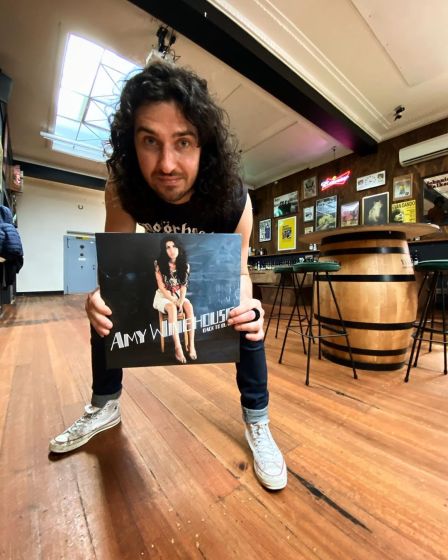
In her sophomore record Amy Winehouse mines her own tumultuous private life for subject matter, penning eleven songs dominated by unflinching themes of addiction, grief and infidelity. On paper, this kind of thematic makeup would make for a rather melancholy album but somehow Back to Black is jubilant in spite of it. Winehouse’s infectious energy, half Michael Caine and half Billie Holliday, is in abundant supply, driving the keen wit and easy charm of her songwriting and the velvet sledgehammer of her distinctive croon. Production credits are split evenly between Saalam Remi and Mark Ronson who painstakingly collage the history of soul music from the Ronettes to Mary J Blige without sounding completely derivative, managing to create a record that sounds fresh rather than an exercise in soul-revivalism. Sharon Jones’ band, the legendary Dap-Kings are on loan here and are, as always, on point. Listening to Back to Black in hindsight after Amy’s death in 2011, it’s hard not to see a lot of foreshadowing in the songs on this record. It is a testament to her skill that she was able to deal with such darkness in a way that brought light to so many.


RECORD OF THE WEEK: THE BEATLES – RUBBER SOUL (1965)

74337079_2190008304627679_1154927473348135159_n

Having just returned from a North American tour, met Elvis Presley and the Byrds and smoked their first doobie with Bob Dylan, the Beatles had absorbed the folk-rock and psychedelia running wild in America in 1965 and and emulsified it with the chart-topping rock n’ roll that had brought them to the dance – the result was Rubber Soul, the beginning of the Beatles’ adolescence and shift away from albums driven by hit singles. That’s not to say there aren’t any toe-tapping hits here: Drive My Car, You Won’t See Me and Ringo’s token vocal turn What Goes on all brim with the Fab Four’s characteristic pep and enthusiasm. However for every “classic” Beatles tune there is an atypical counterpart – “Girl” is languid and sinister, John Lennon’s vocal punctuated by what sounds like long drags on a joint (Lennon described Rubber Soul as “the pot album”) while Norweigan Wood, famous for its use of the sitar, is a hypnotic folk song dealing in dense, abstract imagery. While Rubber Soul didn’t revolutionise the musical landscape in a way that Sgt Pepper or the White Album did, it certainly reflects the growing sophistication of the lads’ craft and is notably the first time since their gestation that pop culture started to influence the Beatles, rather than the other way around.

RECORD OF THE WEEK: KISS – ALIVE! (1975)

75430282_721344208343447_5851372525644087376_n

Although Alive! is Kiss’ fourth LP, it is their very first top ten hit and the breakthrough record that turned them into superstars. This double disc live LP was recorded by the legendary Eddie Kramer (Hendrix, Beatles) and documents Kiss at their larger-than-life best on the 1975 Dressed To Kill tour. Alive! functions as a de facto greatest hits compilation using the best material from their first three records and allows the band to strut their stuff in a live setting where they sound much more at home than in the sterile confines of a recording studio. The roar of the live crowd certainly adds legitimacy to the exuberance and bombast for which the band is infamous. Frontman Paul Stanley asserts that “I never thought any of our first three albums captured the intensity of what the band was going for or was. And it was a problem because people would come to see us and many of them weren’t buying our albums.” Alive! was the turning point where a band with a great live show who had trouble moving records became one of the most commercially successful acts of all time. It allowed them to channel the blood spitting, pyrotechnic chaos of their stage show and finally sound as ferocious as they looked. Heavy on the cheese but all the better for it, Alive! is driven by the campy caricature at the heart of Kiss’ persona. A remarkable live album and a whole lot of fun, Alive! is a document of the band at their absolute best.

RECORD OF THE WEEK: MS LAURYN HILL – THE MISEDUCATION OF LAURYN HILL (1998)

75349284_2475597156022047_7200523832686504448_n

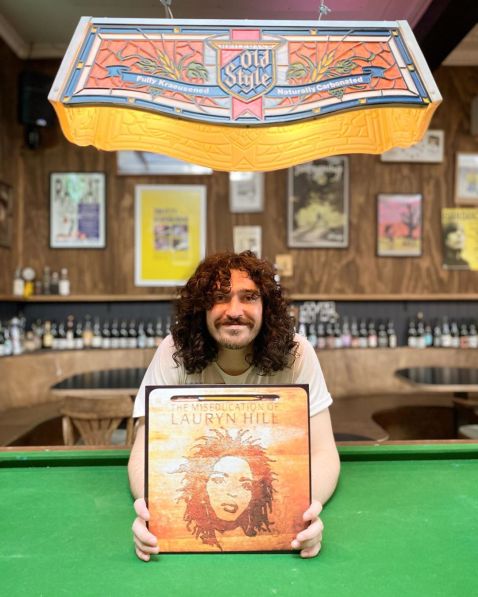
In November 1998, freshly split from the Fugees, Ms Lauryn Hill dropped her first solo album: The Miseducation of Lauryn Hill. In Hill’s words, she set out to “write songs that lyrically move me and have the integrity of reggae and the knock of hip-hop and the instrumentation of classic soul.” Miseducation busted all three genres wide open, becoming wildly successful and influential in the process and ending up on every top albums list, magazine cover and sales chart possible. Recorded largely at the studio Bob Marley built, Tuff Gong studios in Kingston, Jamaica (while she was pregnant with his grandchild no less), the heart and soul of Miseducation is driven by a plucky reggae groove and a lyrical predisposition towards love and personal growth. The influence of soul is represented in Hill’s soaring hooks and the sugar-coated, Motown flavoured doo-wop embellishments that underpin many of the songs as well as in the dazzling guest spots from D’Angelo and Missy Elliott. Finally, the effect Miseducation had on the hip-hop community is singular – to a market oversaturated by violent, materialistic and heavily sexualised gangsta rap, Miseducation was a breath of fresh air. A strong, visionary female MC with a message of love was a wake-up call to established artists and an inspiration to many more. After the release of Miseducation, a bitter legal battle with production team New Ark over credit and compensation led to Hill’s extended retreat from the public eye making this record and her MTV unplugged session her only solo records. If anything, the scarcity of her work makes Miseducation even more precious.