RECORD OF THE WEEK: THE BAND – MUSIC FROM BIG PINK (1968)

72751003_409669563054832_4687224775674812580_n

In 1966, Bob Dylan was at the peak of his powers – he had just rejected protest music in favour of loud, bawdy rock n’ roll, he had released Highway 61 Revisited and Blonde on Blonde in the space of a year and, supported by The Band, he had embarked on an amphetamine-fuelled world tour that made him the biggest pop-star in the world after the Beatles. Then disaster struck: Bob Dylan suffered a motorcycle accident and disappeared from the public eye without a trace. While the Summer of Love dawned, psychedelia reigned and Woodstock changed the world, Dylan was quietly recuperating from his injuries and writing new songs with the Band in a rented house in the wilds of New York State called Big Pink. After spending the summer writing and recording with Dylan, the band was hot property and their debut record, Music from Big Pink, certainly did not disappoint. In a market saturated with electric blues and psychedelia, the Band’s sound skewed instead toward American roots music and is often considered the birth of the Americana genre (which is ironic because every member the Band except drummer Levon Helm is Canadian). The swampy rhythms of the Band largely represented a fresh musical ideology that inspired a new era in rock music. After hearing Music From Big Pink, Eric Clapton was reportedly moved to quit Cream in pursuit of the more roots based style. George Harrison and Roger Waters were reportedly similarly inspired. Even Bob Dylan had abandoned many of his blues-rock adornments when he returned from hiatus. Stylistic elements aside, Music From Big Pink is supported by great songwriting. The Dylan contributions (Tears of Rage, This Wheel’s on Fire and the stunning album closer I Shall Be Released) cover of country staple Long Black Veil are great, but the Band’s own material, particularly their biggest hit The Weight, more than holds its ground in such esteemed company. Music from Big Pink transformed the Band from Dylan’s backing band to stars in their own right, its magic and mystique as powerful today as it ever was.

RECORD OF THE WEEK: PRIMAL SCREAM – SCREAMADELICA (1991)

71117543_1357235514434083_31530080873718747_n

When Screamadelica dropped in 1991, people were initially quite confused. It sounded nothing like Primal Scream’s previous two LP’s, was laden with samples and electronic instrumentation and was largely produced by legendary house DJ Andy Weatherall. Was this some sort of crossover attempt? Is this a rock n’ roll record? Sometimes – there are a couple of cuts (Movin’ on Up and Damaged) produced by Rolling Stones engineer Jimmy Miller which brim over with the Stonesy swagger that would be further explored by the chameleonic Primal Scream on their next LP, Give Out But Don’t Give Up. Loaded also borrows the groove from the Stones’ Sympathy For the Devil. The rest of the time Screamadelica isn’t really a rock record at all, but it’s hardly a house or electronic record either. Inspired by the Beach Boys’ masterpiece Pet Sounds and the psychedelic culture that spawned it, Screamadelica uses a kaleidoscopic palette of dance, rock, gospel, jazz and dub bound together by the infectious, loose grooves that made it a landmark party record of the early 90’s and the recipient of the very first Mercury Prize. If a Rolling Stones album got dragged to the club by its mates and steadily fed MDMA, ketamine and Jäger-bombs all night, there is a good chance it would end up sounding a lot like Screamadelica: absolutely wild.

RECORD OF THE WEEK: ROWLAND S. HOWARD – POP CRIMES (2009)

69009641_220915965539919_6320554686530337261_n

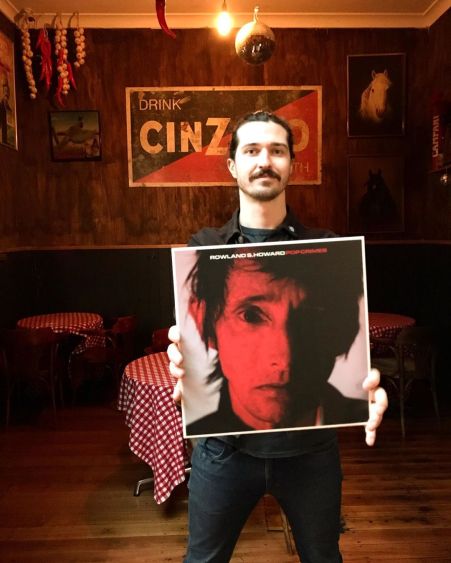
Released shortly before his death in 2009, Rowland S Howard’s dark/sexy/edgy masterpiece Pop Crimes is the final instalment in his sporadic recording career and testament to his visionary and craftsman-like approach to songwriting. Woven into the gritty tapestry of Pop Crimes are elements of Dick Dale’s guitar driven surf rock, Spector-esque 60’s pop, the fatalistic sneers of Lou Reed and Leonard Cohen and the dissonant virtuosity of Howard’s old band the Birthday Party. Undertaking the recording of Pop Crimes while struggling with serious health issues, Howard surely suspected that this record may be his last and lyrically it can be interpreted as something of an epitaph, although even in failing health Rowland remains razor sharp. He sings of Catholic girls with uzis and narcotic lolipops with a weary conviction as the album takes shape around hypnotic, dirge-like arrangements and stinging, chaotic lead guitar breaks. Highlights include album opener (I Know) A Girl Called Johnny, the slinking title track, Wayward Man in all of its Lee Hazlewood inspired glory and the epic album closer the Golden Age of Bloodshed. Howard’s work has always had a sense of the cinematic and Pop Crimes is no different – an immersive record crafted around rich texture and great writing, a feather in the cap of Rowland’s always provocative oeuvre.

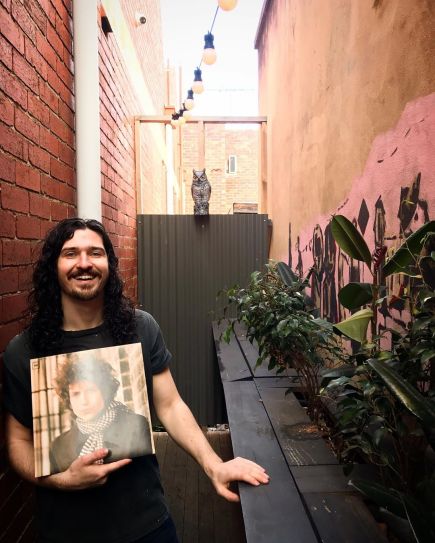
RECORD OF THE WEEK: BOB DYLAN – BLONDE ON BLONDE (1966)

67890962_2321601051484855_419439423368252975_n

After shocking the world in the mid 60’s by going electric and augmenting his intimate folk style with the stylistic trimmings of the still-feared rock n’ roll genre, Dylan released three classic records in rapid fire succession. Following Bringing It All Back Home and Highway 61 Revisited, 1966 saw the release of Blonde on Blonde – one of rock’s first double albums and the conclusion of the androgynous, amphetamine fuelled persona that Dylan cultivated during his electric period. After a few false starts in New York with his backing band The Hawks (who later became The Band), Dylan moved the Blonde on Blonde sessions to Nashville where, with the help of guitarist Robbie Robertson, organist Al Kooper and an all-star cast of Nashville session players, he wrote and recorded the bulk of Blonde on Blonde in just four days. The sessions often ran late as Dylan, feverishly writing lyrics while the band napped and played cards, would summon them at three in the morning to flesh out his visions. However unorthodox Bob’s schedule was, the results evident on Blonde on Blonde are inarguably brilliant. Dylan’s writing draws on the long, winding songs that he established in his folk years, heavily infusing them with abstract symbolism, the absurd and the flat out surreal without compromising the directness and conversational delivery that has always allowed him to connect with his listeners. Musically the bedrock of most of the songs is Chicago blues based, dominated by the triple lead attack of guitar, organ and harmonica that Dylan often favours, however the influences of country, folk and rock n roll seamlessly blend to give this record a heavily textured and often imitated sound with its lashings of brass and barroom piano. Dylan once said that “It’s that thin, that wild mercury sound. It’s metallic and bright gold with whatever that conjures up.” From the woozy squall of album opener Rainy Day Women #12 & 35 to the surreal 11 minute closer Sad Eyed Lady of the Lowlands, Blonde on Blonde is captivating in its entirety – a rare document of a genius at the peak of his powers.

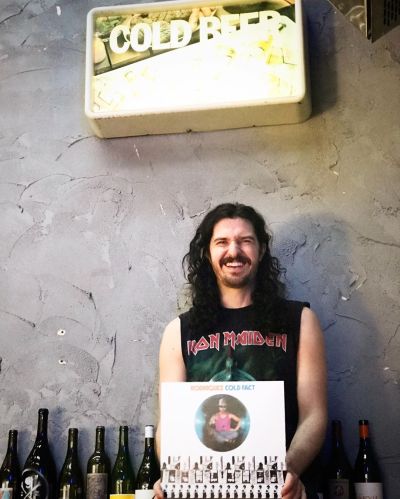
RECORD OF THE WEEK: RODRIGUEZ – COLD FACT (1970)

69431258_181938052833513_3648406744169540098_n

Cold Fact was released in 1970 to little acclaim – ignored by radio and failing to chart, the record was considered a flop. The record was a far cry from the explosive proto-punk of Rodriguez’ contemporaries in the Detroit scene such as the MC5 and the Stooges and likewise was worlds apart from the urbane glam rock of David Bowie and T-Rex that had begun to dominate the pop market. Replete with its Dylanesque lyrics and psychedelic orchestral arrangements, Cold Fact quickly slipped into obscurity with The songwriter releasing one more record to a similarly muted reception before calling it a day and returning to his day gig as a labourer in order to support his growing family. Unbeknownst to Rodriguez however, bootlegs of Cold Fact had begun to circulate in South Africa and Australia, reaching cult status and becoming heralded as a rock classic, often mentioned in the same breath as Dylan, the Beatles and the Rolling Stones. The lack of information about Rodriguez only added to his mystique and his legend grew by word of mouth for decades, the most popular of which was that Rodriguez had blown his brains out and that was why he’d only released two records. As documented in the Academy Award-winning documentary Searching for Sugar Man, a bewildered Rodriguez, very much alive, learned of his fame decades later and returned to the stage to much fanfare and critical acclaim, continuing a successful touring career to this day. The spark that started Rodriguez’ legend, Cold Fact, deserves every ounce of the acclaim it has received. The opening track Sugar Man is anthemic, a lilting ode to a drug dealer gently crooned through a fog of reverb. Establishment blues laments social inequality with machine-gun street poetry and I Wonder captures the excitement and awkwardness of adolescent love with its bouncing melody. Cold Fact is one of the truly great lost records and Rodriguez unique journey out of obscurity only makes it more compelling. A classic.

RECORD OF THE WEEK: SHANIA TWAIN – COME ON OVER (1997)

69473885_413215122732170_1357626078291603481_n

Come On Over continued to refine the country-pop formula that Shania and then-husband and monster-producer Mutt Lange (who you may remember from the previous Record of the Week, AC/DC’s Highway to Hell) had established on her sophomore album The Woman in Me. The arrangements and slick pop production continued to move away from traditional country in favour of boot-scooting countrified rock and soaring pop balladry punctuated with the monolithic choruses that made Lange famous. The enormous impact of this record on popular culture cannot be understated. Come On Over is the best-selling country music album of all time, the best-selling studio album by a female act, the best-selling album by a Canadian and the eighth all time best-selling album of all time to the tune of 40 million copies. Twain and Lange largely co-wrote this record and their romance is at the heart of much of the material. “You’re Still The One” and “From This Moment On” really benefit from Shania’s earnest delivery in much the same way that “Man! I Feel Like A Woman” and “That Don’t Impress Me Much” (allegedly penned by Twain after seeing a nude photo of Brad Pitt) are supported by her easy charisma. The scope of Come On Over’s material and Twain and Lange’s pitch perfect execution make this album’s colossal success richly deserved. An enduring classic after all these years – you’re still the one, Shania!

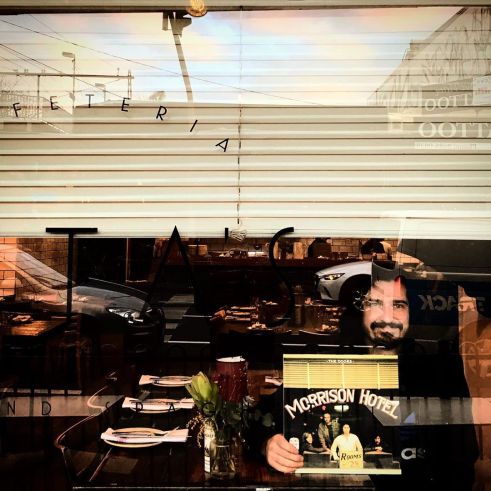
RECORD OF THE WEEK: THE DOORS – MORRISON HOTEL (1970)

66769842_617255715465362_1129554006109032967_n

During a Doors concert in March 1969, Jim Morrison performed intoxicated and allegedly exposed himself to a crowd of 12,000 people at the Dinner Key Auditorium in Coconut Grove, Florida. In the relatively conservative environment of the late 60’s, the Doors’ publicity completely tanked. The Doors were forced to cancel their remaining tour dates and were blacklisted from radio. Their next album, the Soft Parade, was critically panned by many as contrived and pretentious and the lead single “Touch Me” did little to repair the Doors’ reputation with mainstream radio. Morrison’s alcoholism was mounting and several paternity suits had appeared. For a second there, it looked as if the Doors had hit the end of the line. Then they returned to the studio to record their penultimate LP, Morrison Hotel. Hailed as a return to form by critics, the Doors used this record to shed their previous skin. Gone were the psychedelic pretensions and ornate sting arrangements of the Soft Parade, replaced instead by a lean, bawdy bar band. Morrison had started moving away from his signature leather-clad shaman image, reasserting himself here as a fatalistic party boy in Morrison Hotel’s rowdier moments (Roadhouse Blues, Peace Frog, You Make Me Real) and a world weary blues crooner in the quieter ones (Blue Sunday, The Spy). The band’s move toward the blues would become much more pronounced on their next and last LP, the excellent L.A. Woman, but notable here is their use of a real life bass player, the accomplished blues guitarist Lonnie Mack who gives the Doors a looser, more swinging feel compared to the more rigid feeling Fender Rhodes piano bass played by Ray Manzarek on previous records. As a result of this, the Doors loose some of their disjointed Brechtian energy but perhaps that is a part of their persona that they were content to leave behind. Morrison Hotel is a leaner, hungrier Doors that have been around the block a couple times. Given Jim Morrison’s preoccupation with death and rebirth, it is fascinating to watch them reinvent themselves.

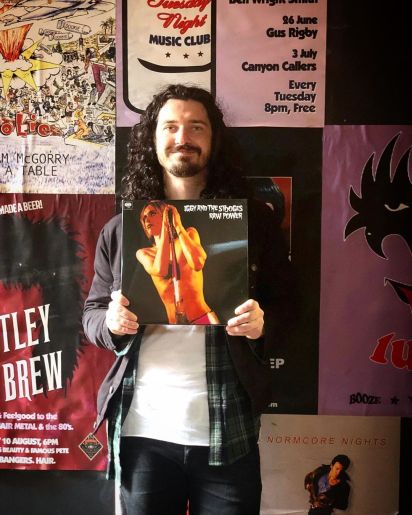
RECORD OF THE WEEK: THE STOOGES – RAW POWER (1973)

67142329_677352492731741_6522942350380314581_n

Prior to the release of Raw Power, the Stooges had hit the end of the road – after two genre defining classic albums, they had had broken up and burnt out by virtue of the primordial fire that had caused them to shine so brightly to begin with. Cue David Bowie: just like he had extended his bejazzled hand to Lou Reed after the demise of the Velvet Underground, Bowie signed Iggy Pop to his management company and secured him a record deal with Columbia. The album that they produced was Raw Power. Featuring new lead guitarist James Williamson, former lead guitarist Ron Asheton on bass and his brother Scott Asheton on drums, the Stooges were as hungry and depraved as ever. Raw Power was produced by Iggy and recorded in one day on primitive equipment in an outdated studio. Despite the energetic performances and inspired new material, Columbia refused to issue Iggy’s original mixes, insisting that Bowie remix the album first. Bowie’s mixes drew a lot of criticism from the Stooges’ hardcore fans for neutering the signature troglodyte groove of their drums and guitars but the album became a classic nonetheless, inspiring a wave of seventies punk and heavy metal despite modest sales. The Sex Pistols’ axe man Steve Jones has claimed that he learned guitar by taking copious amounts of speed and playing along to Raw Power. In 1997 Iggy Pop was invited to remix the album for its re-release, restoring much of the wildness and grit of his original vision. This release includes both mixes – a side by side examination reveals Iggy’s mix as a more satisfying (and much louder!) albeit less dynamic listening experience. This audiophila is all by-the-by though – this record was never meant to be perfect. Raw Power gave Iggy and the Stooges a new lease on life and forever changed the landscape of rock n roll, often being labeled as a pivotal proto punk record. Pop’s declaration that he is a “street walking cheetah with a heart full of napalm” is a call to arms that has echoed in bars and bedrooms, frightening parents and teachers since 1973 and that’s what the Stooges are all about. Play this one loud!

RECORD OF THE WEEK: VAN MORRISON – ASTRAL WEEKS (1968)

67177960_2114825968821682_2759250728570981323_n

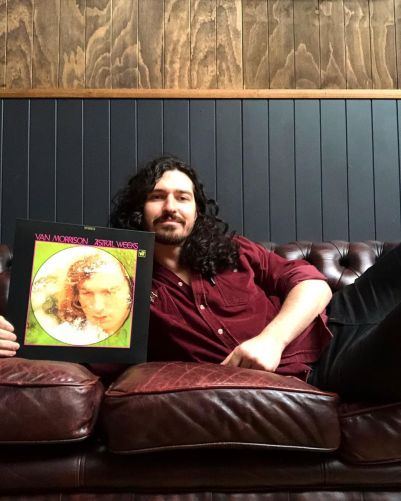
Astral Weeks is a singular album in Van Morrison’s discography and indeed in the pantheon of classic rock albums in which it is often included. Owing little to the blues and soul that have often defined Morrison’s sound, here he instead uses a palate of Celtic folk and jazz to weave a hypnotic soundscape of the earthly and the divine driven by the excavation of memories of his native Belfast. This was Morrison’s first record for Warner who had purchased his contract from his previous label Bang. Stipulated in the fine-print of this deal was a clause dictating that Bang would receive fifty percent of the publishing royalties for any Van Morrison singles released in 1968. This, perhaps, is why there are no singles from Astral Weeks. Instead, it is often referred to as a song cycle and indeed, the rich textures of each song are only enhanced by their inclusion in the tapestry of this album. Morrison’s vocals here are so expressive, sometimes pained and sometimes jubilant; sometimes rooted in nostalgia and often wordlessly channeling the strange mysticism that inhabits Astral Weeks. Van’s wayward guitar strumming and the violins and flutes that drift in and out all pivot around the mesmerising bass playing of Richard Davis to create an atmosphere that feels a thousand years old. Key moments include the title track and Madame George but this record is strongest as a whole. As Van sings in Astral Weeks’ opening lyric, let him venture in the slip stream, through the viaducts of your dream.

RECORD OF THE WEEK: SHUGGIE OTIS – FREEDOM FLIGHT (1971)

66293764_399686673998815_4712993252425872204_n

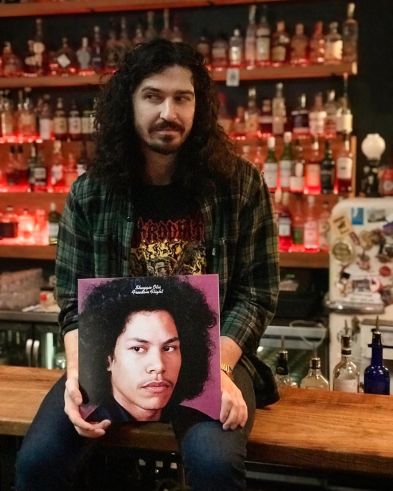
Shuggie Otis – a precocious multi-instrumentalist and son of legendary rhythm and blues bandleader Johnny Otis – was fifteen years old he played bass on Frank Zappa’s Peaches en Regalia. At sixteen he released his debut album Here Comes Shuggie Otis and by seventeen he had released his sophomore album, 1971’s Freedom Flight. Best known for Strawberry Letter no. 23 – famously inspired by his girlfriend’s disposition for scented stationary – the song was covered by the Brothers Johnson in a Quincy Jones produced, platinum selling effort and has appeared sporadically in pop culture ever since. While Strawberry Letter is decidedly the album’s crown jewel, Freedom Flight has a veritable smorgasbord of funky delights to offer. Sweet Thang is sinuous, swampy R&B with a texture as rich and thick as molasses. The thirteen minute title-track verges on free jazz – the gentle ebb and flow of the rhythm section nudging the conversational duel between guitar and saxophone into the ecstatic. Meanwhile, the barnstorming album opener, Ice Cold Daydream, is adorned with lashings of Wah Wah guitar over a throw-down rock n roll beat, suggesting the influence of Jimi Hendrix on the young Shuggie. Although he plays all the instruments on Freedom Flight, Otis’ guitar playing is virtuosic. Veering between soul, jazz, funk, rock n roll and the blues, many of Freedom Flight’s most transcendent moments hang on the sheer vitality of the Shuggie’s playing. After releasing the excellent Inspiration Information three years later in 1974, Otis entered a period of self imposed exile from the music industry at twenty-two years old, appearing on only a handful of sessions until re-emerging in 2014. Shuggie’s musical output from fifteen to twenty two is remarkable, achieving the kind of growth and output in a few short years that most artists spend their lives chasing. Freedom Flight is a remarkable record – a great introduction to Shuggie’s genius and a valuable insight into the depth and scope of his vision.